Showing posts with label birding. Show all posts

Monday, July 6, 2015

Celebrating Feathers With Songs

One of the most brilliant sounds in the forest is that of our songbirds.  As a bird photographer who spends many hours hiking in the woods, an added bonus is hearing their bright delightful calls and songs.

The gray catbird below bursts out a cheerful song and also a "meow" call that is the reason for his name. 

Gray Catbird by Sheen's Nature Photography


Particularly in the spring, birds' songs and calls echo through the woods and in backyards. It's the time in which the males actively seek their partner for breeding.

The male redstart below sings near the lunch hour at a significant bird migratory spot in Ohio, Magee Marsh.

American Redstart by  Sheen's Nature Photography

The females, such as the female redstart below, respond in return with their cheerful, melodious songs.

Female Redstart Sings the Morning Away
Sheen's Nature Photography
 
An easy way to connect with nature, even if you are not a bird photographer, is to walk in the woods, stop and listen.   Nature will guide your way.

For a free monthly photography tip, visit my website signup page. Or, just visit my website to view nature, landscape, wildlife and nature photographs. 


Monday, July 21, 2014

Sandhill Surprise....A Walk in the Woods

Weekend walks in the woods bring wonderful sights and surprises.  Whether it's birds, wildlife, flowers, insects or foliage, some of my best grounding moments have been on hikes carrying my camera.

This particular day in July was no exception.  At a Detroit area metropolitan park, Kensington Metropark near Milford, Michigan, nature lovers, cycling and running enthusiasts have options to choose from.  An eight mile running and cycling trail circles Lake Kensington while other off-road  mountain cycling trails touch Island Lake.  

Woodland Walk - ©Sheen's Nature Photography
A nature center along with nature trails also meander through woods, marshy areas and an open lake.  Birds, deer and other wildlife can be seen while strolling through trails and sometimes, if lucky, even in the parking lot early in the morning.

This particular Saturday, Sandhill Cranes were actively feeding and visible on the shaded woodland trail.  Another pair casually grazed on the grounds not to far away from the parking lot.  
"Please Take My Picture" - ©Sheen's Nature Photography
As the parking lot "Hollywood Posing Pair" was used to people, they were not camera shy.  In fact one followed me around for several minutes,  gracing me with a close-up of the vibrant, bright orange eye.

A good morning indeed!

Happy Shooting!


Wednesday, April 30, 2014

The Biggest Week in American Birding....Coming Soon!

The Biggest Week In American Birding is coming upon us beginning May 6, 2014.  It is the time of year when birders and nature photographers from the Midwest and around the world congregate in a tiny area in Northwestern, Ohio called Magee Marsh.  The other name for Magee Marsh is "The Warbler Capital of the World!"

Why?  Well, for starters, take a look at a few of the warbler images throughout this article that were  captured last year on the Crane Creek boardwalk trail within the park!

Hooded Warbler on the Crane Creek Trail - Sheen's Nature Photography
Magee Marsh is right next to Lake Erie and is a significant stopping and resting spot for migrating birds.

How easy is it to see the warblers and other birds on the trail?
At the visitor center, swallows are very people-friendly with nests right above the entrance door.  Purple martins abound in their houses along with other migrating birds on the visitor center trail.

 Official Greeter at the Visitor Center - ©Sheen's Nature Photography
On the Crane Creek trail it is very easy to see the warblers and other migrating bird species.  Of course, birds fly, dart quickly and can be elusive.

On the trail there are guides that are happy to assist in pointing out and identifying birds.  There are also many avid birders who graciously share their passion and knowledge when a bird is spotted.  

Just in the parking lot alone last year I saw chestnut sided, bay, yellow and black-throated green warblers.  This was in addition to seeing the scarlet tanager and northern oriole.  Then the trail walk began!

Photographers:  Heads Up!
Photography opportunities exist throughout Magee Marsh.  The visitor center, in the parking lot alongside the woods, the trail and along the water ways and Lake Erie all offer easy access to bird viewing.  On the boardwalk trail, it is very crowded so if you need a tripod with the big lens, you may want to use a monopod or go with a 300mm.  In the parking lot and other trails, the tripod works well.  The boardwalk can be very shady in spots so a speed light can make a difference.

When is the best time to go?
We try to arrive around 7:30 - 8:00 a.m. as that's about the time the birds start getting active.  My personal observation is that they sleep in a little longer here since it is such a great little haven.

If you can go during the week, it's highly suggested as it can get congested on the weekends.  But don't let that stop you from going on a Saturday or Sunday.  More people means more bird spotters.

Playful Yellow Warbler - ©Sheen's Nature Photography

Activities during The Biggest Week In American Birding:
Here is a link to the guide of activities during the week.  Additionally, there are numerous sponsors that donate resources and time to this event.  Exhibition booths are at both Crane Creek and the visitor center.

Some of the biggest names in birding will be there including Kenn Kaufman and his wife Kimberly.  Along the trail, experts come in all ages and sizes.  It's energizing to see our youth tackle this hobby as well as the seasoned veterans.

Another terrific participant is the non-profit wildlife rescue group Back to the Wild, One Rescue at a Time.  In past years they have brought rescued raptors, eagles and owls for educational purposes.  If you have an opportunity to be there the day they are, please give a donation.  They do great work!

Prairie Falcon Courtesy of Back to the Wild, One Rescue at a Time
©Sheen's Nature Photography

What to wear?
Be prepared for anything.  It could be rain, chilly, windy to warm and pleasant, and that's just within a 30 minute window.  I recommend a lightweight rain poncho just in case.  It's right on Lake Erie so the temperature is always a bit cooler.

May is a huge bird migration month, so even if you can't make it to Magee Marsh, nothing's stopping you from taking your binoculars, camera and going for a hike in your local nature areas.

HAPPY SHOOTING!
Sheen

All images were captured using:  Nikon 5100, Nikon 7100,  Nikon 70-300mm and Sigma 150-500 lenses.


Monday, April 7, 2014

Go West....to the Real, Old West

Raw, dusty and rock laden terrain points toward blue skies that stretch as far as the eye can see.  Muted shades of many colors roll across flat lands that quickly enfold into mountainous ranges and ancient limestone canyons.

Vermillion in Full Sun
Nikon 7100, Sigma 150-500, ISO 160, f/8, 1/250
Big Bend National Park rests in far west Texas alongside the Rio Grande river. Quietly, she waits to share desert delights of blooming cacti, hundreds of bird species and onyx nights filled with diamonds in the sky.

She surprises with pockets of riparian habitats offering close ups views of many wildlife species. The Cottonwood Campground, Rio Grande Village and the Chisos Basin are the three largest primary riparian areas within the park.

Our first stop in the park was Cottonwood Campground.  The reward? Vermillion flycatchers that zipped from campsites, to barbed wire fences to low hanging branches.

My first step was to observe their flight patterns and poses.  From there, I determined my plan of locations, camera settings, lighting and lens.  As I had recently added a Nikon 910 Speedlight to my arsenal, it was a well appreciated tool in the shady Cottonwoods.

While photographing birds, I almost always use Aperture Priority mode.  Given the shady conditions in the campgrounds, the best images came from those with f/stops that ranged from f/7.1 to f/10.

The lower the f/stop number means a larger amount of light coming through the lens.  The more light, the faster the shutter speed.  With more light, the depth of field is more shallow which means your foreground is sharp and the background is blurred.

The male vermillion below was captured using an Aperture of f/7.1.  The bird is in focus and the leaves and branches are very soft and blurred.  The female was captured using an Aperture of f/9.  You'll see a bit more branch detail behind her but with some blurring.  It was very windy and I wanted to capture the surroundings to share her delicate strength as she gripped the branch.  The Nikon 910 Speedlight was used in these two images to get more detail of the feathers.
   
Nothing Boring about the "Bird on the Stick," Vermillion Flycatcher
Nikon 7100, Sigma 150-500mm, ISO 250, f/7.1, 1/250 sec

Female Vermillion hangs on in the West Texas Breeze
Nikon 7100, Sigma 150-500mm, ISO 250, f/9, 1/640 sec
Our next morning was spent at Rio Grande Village searching out the Common Black Hawk nesting in the Cottonwoods.  Even though the Vermillion flycatchers danced to my right, left and overhead, I only had eyes for the black hawk sitting in a cluster of branches.  As a birder, it was a first time sighting.

As a photographer, it was a rare gift to capture and now share.

Black Hawk Preening for its Mate
Nikon 7100, Sigma 150-500mm, ISO 250, f/7.1, 1/200 sec

That afternoon was spent in the Chisos Basin where a winding, steep downhill led to nesting pairs of Mexican Jay's.  These jays can be found in oak woodlands in Western Texas, New Mexico and Arizona.  Always sassy and full of spunk, the Mexican Jay's vibrancy glows against the desert background.

Mexican Jay peering around an oak
Nikon 7100, Sigma150-500mm, ISO 250, f/9, 1/250 sec 
From sunrise to sunset, Big Bend National Park is a bird and nature photographer's delight and escape.  To get there, be prepared for a journey.  It's a solid seven hour drive from San Antonio or a four hour drive from El Paso.  Everything is bigger in Texas, including the drive.  But the roads travel fast as it's legal to go 80 miles per hour along I-10.

Since it is remote and vast in scope, planning in advance is highly recommended. We stayed at the Big Bend Casitas at Far Flung which is just outside the park in Terlingua, Texas.  The cozy casitas (cabins) were well appointed with small kitchens and very clean.  The grounds observed the 'no lights outside' so you could rock the time away gazing at the stars from your private porch, relaxing in a rocking chair.  

The real west awaits....

Happy Trails and Happy Shooting!
Sheen


Monday, March 24, 2014

March Madness: Nature Photography

Collegiate basketball fans unite once again in front of their high definition TV's and in sports bars cheering on their teams and players.  Pre-game predictions, post-game analysis, office squares and water cooler verbal volleys resonate everywhere you turn.

In Michigan, it's really heating up indoors now that Michigan and Michigan State are in the Sweet Sixteen.  And that's about the only place you'll find heat in Michigan this year.  Our chilly, snow-laden winter has extended from November through today. March 23 was a not-so-sweet sixteen degrees this morning.

There are advantages to a late winter thaw in March.

Red-neck Grebe has a Catch
Nikon 7100, 150-500mm, f/9, 1/500 sec, ISO 250
Last week at Stoney Creek Metro Park, it was another bitingly cold morning.   A Red-necked Grebe delighted in frolicking and fishing in icy waters for his morning breakfast. As much of the lake was frozen, this pushed a diving duck into closer photography proximity.  A major score as a photographer and a new addition to my birding life list.

The teams that make it so the Sweet Sixteen don't get there with luck.  There are countless hours studying game plays, listening to the coach as he lays out the strategy, watching tapes of their opponent, athletic conditioning drills and time on the floor.  The players spend many hours training with their teammates and many hours individually honing their skills.

As evolving photographers, we commit to hours of studying, practice, time in the field and then back in front of our computers reviewing our game day in the field.  We play in conditions that sometimes other seriously think we have achieved our own level of  'madness.'

In the serious cold, our field time may be a little bit shorter.  This can be readily be replaced by reviewing 'game tapes' that can improve our editing skills.  We spent a lot of time snapping nature, let's ensure we bring out the beauty that captured our eye in the field.

Easy to find post processing tips can be accessed on You Tube.  Type in your topic and a whole host of videos will emerge.

Additionally, as a Lightroom 5 user, I recently discovered from another photographer friend, informative, easy to understand videos that have quickly enhanced my post-processing skills.  The George Jardine video tutorials contain 23 different segments concentrating on the tools in the Lightroom 5 Develop module.  You can easily select which one you want to review or playback again at any given time.  Time spent with these videos can help you produce a game winning image.

Female Wood Duck
Nikon 7100, Sigma 150-500mm, f/9, ISO 250, 1/800 sec
Today I drove back to Stoney Creek Metro Park only to find that the thaw had started from warmer temperatures this past week.  The Grebe moved on.

Initially, I planned to head back home.  If I had succumbed to my inner voice of "it's too cold to be out here,"  I would have missed another wonderful March Madness nature moment.

My game strategy for the day needed be altered.

I executed a course correction and headed to Paint Creek Trail in Rochester, Michigan.  Hoop there it was!  Moving among many mallards, was a sweet and beautiful female wood duck.  The equivalent of a three-point shot.

Happy Shooting and enjoy March Madness!
Sheen


Tuesday, February 25, 2014

Good to Be Gray: Winter Nature Photography

Another week of snow. Another week of sub-freezing temperatures with many inches of snow and ice on the ground.  I could have sipped my green tea and fumed over the fact that my MacBook was being repaired while I sat indoors with rare, idle time.

If the birds can tolerate the cold, so can we.  Clean the lenses, clear the memory cards, time to go out.

While it's great to have a goal for your shoot, photography is a form of art.  To capture art, it's important to take in all the elements.  If you're too focused on one mission a magical photo opportunity may be missed.

Each season brings its own charm. Winters in Michigan with its bitter cold and isolating gray is no exception.  Farmland and rolling hills are framed with icy, barren trees. Memories of time gone by ignite when I happened upon abandoned farm equipment on one of my winter shoots last year.


Of Time Gone By
Nikon 5100, 55-300mm, f/10, ISO 250, 1/400 sec
In February, there are a few wintry weeks left before the Snowy Owls head farther north. With location tips from fellow birders, knowledge of their habitat, time to create my own luck. 

Before leaving to go back home on a winter shoot, we drove one last time through the route. The Snowy Owl appeared.  Our magnificent Ghost Owl.  He was probably there all along, watching as we drove through our version of the tundra searching for him for a couple of hours. 

He was quite stoic, perched patiently atop an old telephone pole as I put my camera on the tripod.  He then scratched, moved his head 270 degrees a few times. 

Snowy Owl Watching
Nikon 7100, Sigma 150-500mm, ISO 250 f/9, 1/640 sec

He posed graciously for many snaps until we both were startled by a child coming out of nowhere shrieking, "What are you taking a picture of?" 

Yes, he flew away. While he flew, we both silently stared as his casper-like wings moved softly in silent flight.  A treasure to observe.

When I showed the young girl the many owl images in my camera, she became genuinely inquistive in the owl, about birds and photography. 

Hmmmm.  A potential convert.  It's good to be outside in winter.

HAPPY SHOOTING!


Sunday, February 9, 2014

Seriously, I'd Rather Be Behind the Lens

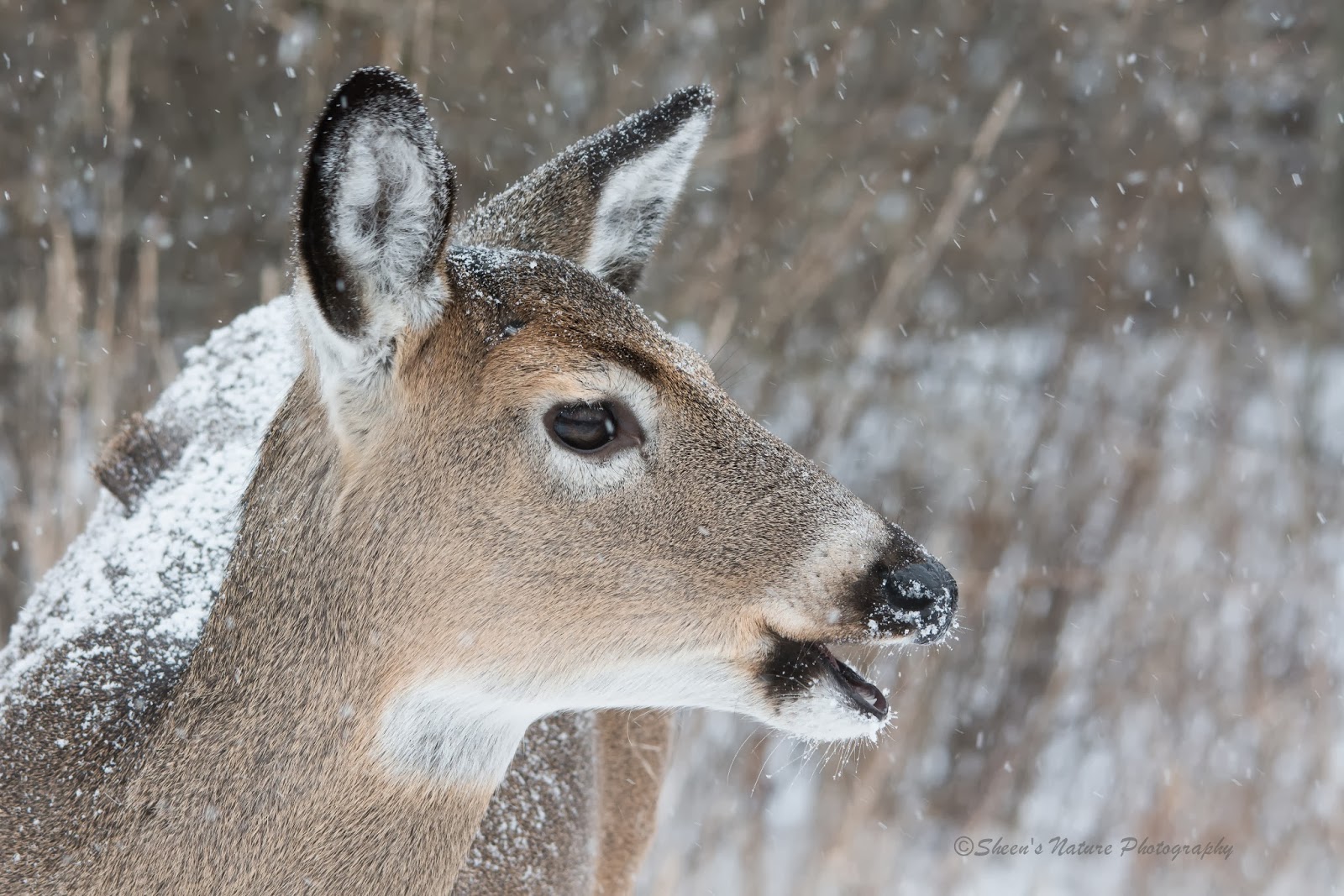
A sun starburst edges from behind a tree as the magic hour approaches.  A fluffy hooded merganser glides through a gold illuminated  pond at sunset.  We pause when the bright, rapid beat of a red-bellied woodpecker's tapping echoes through the forest.  And sometimes…it is the sound of silence as you gaze into the gentle brown eyes of a deer in the woods.
Swimming in Gold
Nikon 7100, Sigma 150-500
It's moments like these that beckon nature photographers to rise well before dawn, embrace cold, snowy conditions, all for that desired shot.  Then it's the thrill of editing and bringing the images in the camera back to life as we sip our steaming green tea.
Red Hat
Nikon 7100, Sigma 150 - 500mm
The last place we want to be?  Reconciling invoices, expenses and legal paperwork! To help expedite getting your business back-office established, here's a few key steps.

Deer eyes….
Nikon 5100, 55-300mm lens
First, I recently established my Limited Liability Corporation: Sheen's Nature Photography LLC. Since I'm not an attorney, an accountant or effective book keeper, I needed to apply the KISS method - keep it super simple!

Legal Zoom uses the KISS approach and completes the tedious legwork for you.  It took about 45 minutes online and a well-deserved payment.

They took care of everything. When I made a slight mistake, they called for clarification. As a result, I had a credit applied to the total.  They gave me email and voicemail updates every step of the way.

All that I needed was delivered to my door, earlier than planned.  There was no way I could get time savings, accuracy and legitimacy by doing this on my own.

Next, a business checking account.  Note:  financial institutions require you to have an EIN and your articles which Legal Zoom provided.   Huntington Bank was my choice as their service has always been professional with insight to assist in quick decision making.

And last, we can't forget a small business credit card to keep our business expenses organized.  The American Express Small Business Credit Card is a great way to go. Since I am a frequent traveler with Delta, the ability to earn miles is an extra perk. Those miles will fly me to photography adventures.

It's February and a 2014 resolution has been accomplished, with eleven months to spare doing what I love with my free time.

HAPPY SHOOTING!


Monday, January 20, 2014

It's Time….

A few weeks ago, I wrote "Is it a Resolution or a Delightful Journey?"   The intent was to describe many of our experiences in making resolutions happen.   It's past mid January. It's time to assess if our 2014 Resolution has taken hold.

After that article, I received questions in my Facebook page Sheen's Nature Photography. They centered on my 'what my resolutions are for this year' and my favorite, 'did I have and complete my resolutions for 2013?'

Let's start with the latter question as my 2013 goal was broad with a few specifics.

The overarching desire was to grow as a photographer as I had started in the spring of 2012.  I also wanted to capture images of various wildlife.  One in particular, the Snowy Owl.

Tundra's Ghost, the Snowy Owl by Sheen's Nature Photography
Nikon 5100, 55-300mm

On a snowy, very cold wintry day, I along with some dear friends went out in the Northern Michigan elements to capture this ethereal, ghostly and magnificent owl.

We weren't lucky by chance, we made luck happen.  I live by the rule, "I'm a great believer in luck and I find the harder I work, the more I have of it." (quote by Thomas Jefferson)  We had a plan, did our research, drove hours to our destination and worked the area.  A resolution accomplished.

The Ethereal, Ghost Owl by Sheen's Nature Photography
Nikon 600, 70-300mm

Growth came by reading ebooks (see list below), linking up with Facebook photography pages and reading blogs from photographers.

A local nature photography workshop offered new tips and contacts.  A vacation in Nags Head, North Carolina created an opportunity to work with a local, professional landscape photographer Dan Waters. 

Nags Head Pier at Sunrise
Nikon 600, 14 - 24mm
The outcome is the personal satisfaction of seeing my photography evolve.

What's on the horizon for 2014?

  • Travels to new locations:  Smokey Mountains, Tennessee and working on Costa Rica
  • Capturing images of 'life birds':  Snow Bunting and the Lapland Longspur, next weekend
  • Adventures to specific locations for new subjects:  Austin, TX for bluebonnets in the spring
  • Establishing relationships with local businesses?  February, more to follow
  • Making the business official:  Yes in January! Thanks to Legal Zoom my official LLC paperwork is due to arrive this week.  

There are many articles, theories that indicate that it takes 21 days to make a habit. However, it doesn't matter what the articles say.  What matters is what we really want to do and if we choose to make it happen.

Happy Shooting!

Books:  (available through Amazon or the artists websites)
Improve Your Wildlife Photography, Jim Harmer
Better Birds: A Photographer's Guide, Steve Dimock
How to Photography Landscapes Like a Pro, Steve Rutherford
Mastering Exposure in Digital Photography, Stephen Hockman
8 Types of Natural Light, Anne McKinnell
Creative Photography Techniques, 20 Tips for Stronger Images, Dan Bailey
Earth and Light Digital Media books by Richard Bernabe available through his site

Sunday, January 5, 2014

'Endeering' & Enduring Moments

What did your work day look like on the second Tuesday in December?  Do you remember who you met with and what was discussed?

When was the last time you were out in the field with your camera or just out on a hike?  Do you remember who joined you?  Did you experience a natural 'chill pill'?

A Deer Moment by Sheen's Nature Photography
Nikon 7100, 150-500 Sigma,  ISO 250, f/9, 1/160 sec
More than likely you could clearly recall the second set of questions versus the first. It is important to make sure we spend our precious free time engaged with what we hold dear.

As a nature photographer, time spent amongst nature and behind the camera is not only enjoyable but grounding.  When looking at wildlife, birds, flowers and fauna for extended periods of time, our normal daily grind fades into a different world.  This world is filled with sounds, colors and emotions that bring reality to our souls.

In most areas, even large cities, four season nature photography escapes are not that far away.  Within a few miles of my home town of Birmingham, Michigan, nature centers, metro parks and nature trails with abundance of wildlife are within driving distance.

Deer Friends by Sheen's Nature Photography
Lloyd A. Stage Nature Center in Troy has multiple hiking trails providing up close viewing of deer, over 200 species of birds, streams with fish and woodlands.

A bit further east you'll find Stony Creek Metropark.  Diverse in it's offerings, you can golf, run, bike and fish.  Additionally, this park hosts nature trails that meander through woods, fields, across streams and around lakes.  Wildlife viewing, birdwatching (they just had their first eaglet born to a Bald Eagle family this past summer) and wildflowers are just a 'wait and see' moment away.

To the west is Kensington Metro Park  which has sprawling acres of wooded, hilly terrain that surrounds Kent Lake.  Wildlife and waterfowl are anything but scarce.

Deer Conversing with Nature by Sheen's Nature Photography
All deer images captured at the Lloyd A. Stage Nature Center
To find local parks and wildlife viewing go to your favorite browser and type in Wildlife Viewing near your town.  Then after a little planning,  grab your gear and go.

The next time you've had a "Worked Hard for the Money" day or week, don't let a "Baby It's Cold Outside" mindset stop you.  Reality, enduring memories and mother nature await.  HAPPY SHOOTING!


Wednesday, September 25, 2013

Greener Grasses....

In nature photography the grass is greener right where you are and on the other side of the fence.  Planning our next photography adventure whether it's a destination location or a local favorite spot always gives us something to look forward to.

Sunset Surprise
Nikon 5100,  55-300mm, ISO 200, f/10, 1/500 sec
Cities like San Francisco with Golden Gate Park on the west side and Sonoma Valley in the heart of the wine country are gorgeous hot spots - whether you are a photographer or a tourist.

Interestingly, a couple of my favorite early images as a photographer happened nearby these locations where I was just savoring the moment of being away on vacation.  

This sunset image was taken from the north side of a beach parking lot northwest of Golden Gate Park as we were watching the ocean.  

I had read Jim Harmer's Improve Your Photography: How Budding Photographers Can Get Pro Results on the airplane the day before. A focal point just like he described in the fourth chapter popped in front of me as I strolled up the incline. Nature's bare branches framed the rosy sunset and sapphire blue ocean.

The Love Button
Nikon 5100, 18-55mm, ISO 200, f/5.3, 1/250 sec
On the backend of our trip, we were in Sonoma Valley for a couple of days. Loaded with beautiful landscapes, wonderful birds, hills of many colors and many wines, it was a street side garden near a park that all but smiled to passersby.

We were birding in Larson Park viewing western tanagers, phoebes and scrub jays to name a few.

This garden yellow flower shouted happiness from across the street that needed to be captured and shared.

Recently, on a local natural beauty road near Springdale Golf Course in Birmingham, MI, I had every intention of capturing multiple perspectives of periwinkle-blue chicory flowers.

Soft, early morning sun with no breeze, tripod set low to the ground, several minutes were filled with many snaps shooting images of one of my favorite flowers.

Bleu Backlit Beauty
Nikon 600, 105mm, ISO 250, f/9, 1/400 sec

But then I stood up to stretch - a must in photography.  Across the road the dew sparkled like diamonds on a long, green, multi-acre lawn.  The next 20 minutes were spent horizontal in wet grass completely mesmerized by nature's liquid crystals.

The Greenest Grasses Reside Within Us
Nikon 600, 105mm, ISO 250, f/8 1/800 sec
Afterwards the clothes were a bit soggy, but the images were worth every chill bump.

Enjoy your next destination and don't forget to stop, stretch and find that your greener grass exists right where you are standing.  Happy Shooting!


Tuesday, September 10, 2013

It's Not Just About Our Back Yard

Summer highways, fields and forests are filled with brilliant yellows, pinks and blues. Gardens ebb and flow with color as perennials peak and give way to the next round in the blooming season.  A host of songbirds, butterflies, bees and insects take delight in savoring their region's balanced food chain.  


Black-eyed Susans at Quarton Lake
Nikon 600, 105mm, ISO 250, f/5, 1/60 sec


Sustaining our beautiful, colorful native plants is easy.  Talk to your local nursery, ask them to carry native plants and plant them in your backyard.  Just as important, asking your local communities, city parks and business parks to plant native versus ornamentals also can make a difference. Many of these groups are already headed this direction.

Avoiding and eliminating invasive plants is crucial to maintaining a healthy food chain. The newsletter "Why Should I Care About Invasive Plants?" provides a brief, descriptive review of invasive plants and species.


Butterfly Savoring Breakfast at Quarton Lake
Nikon 600, 105mm, ISO 250, f/6.3, 1/640 sec
Not all non-native plants are harmful. Roses, tulips and many garden favorites are safe for your garden and the environment.  

"Invasive" represents those aggressive plant species that grow and reproduce rapidly and causing disruptive, major changes to the areas they start to take over.  

In my hometown, Birmingham, Michigan's City Government has taken a very active role in eliminating invasive plants.  They use native plants in restoration projects and new developments, educate the community and provide tips on their website about being environmentally savvy. 

Whether in a large metropolitan area, small community or rural environment, planting native plants makes a difference.  Native plants save water and prevent high maintenance costs caused by invasive plants. 

Check your local area website to see what's been accomplished and what's planned. You may find that you can positively impact both your local community and local environment.

 Happy Shooting!

Tuesday, September 3, 2013

Your Camera is not Exercise Equipment

What does exercise equipment such as a treadmill have to do with a camera?  How many treadmills are either gathering dust or being used as a great place to hang clothes? 

Kestrel's Poised Pose
Nikon 7100,  Nikon 70 - 300mm, IS) 400, f/8, 1/640 sec
Many of us have had or have intentions of getting in to photography.  We think about it, talk about it and buy our first 'real' camera.  The cameras that have dials, buttons, lots of features and capabilities.  

We take it out of the box and start reading the manual.  

Impatient to get through the details, we grab the camera, go outside and start taking pictures.  One of a squirrel, a couple of the kids, the dog and maybe a flower or two.  

We go back inside to find that the picture on the screen looks so....tiny, blurred, washed out, etc.  Definitely not the vision of what we thought our work would look like. 

This is it!  This is where many cameras are gently tossed back to their box to be used another day.  Instead, it gathers dust and takes up precious closet space.  

Why?  Pick one or all of the following or add your own to the list: 


Summer's Color
Nikon 5100, Nikon 105mm, ISO 250, f/5, 1/200 sec  
Not enough reading.  

Not as easy as we thought it would be.  

Not enough time.

No one to ask questions.

No plan.

Here are some simple recommendations to getting started and progressing as a photographer:
  1. Talk to another photographer or your local camera dealer to understand the time commitment, what it takes to learn what you want to do.  It could be a simple as an hour or two.  Or depending of your goals, could require extensive practice.
  2. Have a general idea of what you'll enjoy taking pictures of behind the camera before you make your purchase.
  3. Buy a good camera (I use Nikon) from your local camera dealer and take it out of the box. 
  4. Commit to a few hours of reading the manual, a how-to-use the camera book and an easy to follow photography book.  Refer to blog "Finding the Photographer Within Us" for examples of each.
  5. Explore other's images on Google, Facebook (Facebook page example: Sheen's Nature Photography), Flickr, etc. to inspire your own style.
  6. Get out there and take many pictures. Close up, far away, looking down, looking up, different settings.
  7. Google 'how to' photography tips for your specific interest
  8. Recognize that you will only really be thrilled with a small percentage of your images - that's normal.  
  9. Don't take yourself too seriously. You will evolve with experience. If you're having fun, it will be reflected in your work.
HAPPY SHOOTING!

Egret in Reflection
Nikon 7100, Nikon 70 - 300mm, ISO 320, f/6.3, 1/1000 sec

Thursday, August 8, 2013

Invading the Invasive

The bright buzzing bee tickles the chicory flowers as she moves from stem to stem in the abandoned, wild garden.  In the background, a red winged blackbird sings its' sharp screech while perched on a low branch.  The moment of making the big decision of the morning arises.  Do I use my telephoto for the audaciously loud blackbird?  Or, do I stay with my macro to capture the bees?
Sweet sweat bee enjoying some morning Chicory
Nikon 600, 105mm

Both wild and cultivated gardens have flowers, insects, birds and other natural gifts offering a changing pallet for the photographer.  The natural order and food chain that provides this pallet needs to be protected and preserved.  Our understanding of how native plantings, compatible plantings and invasive plants impact nature's gardens is necessary for balanced environments.

Native plants are adapted to the combination of water, soil, temperatures and nutrients.  As a result, they are energy efficient, require less maintenance and enhance the food chain.  Natives easily fill gardens, fields, roadsides with color that returns year after year.

The Lady Bird John Wildflower Center site has a quick guide to finding out if your favorites are considered native along with other event and conservation information.

Red-winged Blackbird
Nikon 7100, Sigma 150 - 500mm
Invasive plants do just the opposite.  They consume more water.  They require chemicals and potentially radical methods to destroy.  They can become aggressive and destructive weeds to the local habitat and ultimately, nature's order.  Natives are basically choked out of their habitat.  Invasive plants' resistance to local bugs and insects cause insect decline or disappearance.  When local insects decline, sadly, other's in the food chain follow.

Our call to action: invade the invasive plants and take them out of our gardens, landscapes by the roots!

Information and warnings of invasive plants can readily be found on the internet.  Check out Cornell University's Ecology and Management of Invasive Plants Program to see a listing of invasive plants and the research work Cornell is performing.

Going "native" does not mean that you get rid of your beautiful, well-tended compatibles. Compatibles coexist nicely with our natives.  Rose bushes, hydrangeas, hostas, annuals and other plants while require a commitment for care, do not tear down native habitats.  It's important to understand your non-native plants behavior before planting.

Today, more nursery's are carrying more native plant inventories.  A nursery that is leading by example is Four Season Nursery in Traverse City, Michigan.   They are very active members of organizations that promote native planting habitats including Saving Birds Thru Habitat.

So whether we are gardening, birding or capturing images...knowing and nurturing our native plants and what they attract will protect and enrich our environment.

Happy Shooting!


Wednesday, July 31, 2013

About the Birds and the Bees....the Pollinators

The 'birds and the bees' and the 'flowers and the trees' can have multiple meanings, depending on who you ask.  For nature photographers (and gardeners), they represent amazing wonders to be shared.

Lunching Goldfinch image
 Nikon 5100 55-300mm
Let's start with our birds.  They need protein-rich foods that come from seeds and insects.  When we plant native flowers and trees we are supporting and sustaining their food chain.   Learn more about Bringing Nature Home: How You Can Sustain Wildlife with Native Plants through the website and informational book.

The female goldfinch pictured to the right efficiently uses the thistle-seed for nutrition and the thistledown (soft fibers) for nesting material.  Thistle flowers are a beautiful, vibrant purple and their downy material provides wonderful, artful interest in the fall.  If you like goldfinches - plant thistle in your garden!

You and the birds will be rewarded with a frenzy of cheerful, colorful activity.  Since their food and nesting source blooms later in the season, you may also have another round of bird families in your own personal habitat.

Little bluebird of happiness, Nikon 70 - 300mm


Eastern bluebirds enjoy insects and
invertebrates. 2/3 of their diet comes from grasshoppers, crickets, katydids and beetles.  The other 1/3 is made up of wild fruits.  Pesticides, insecticides can take away their food sources quickly.


For additional insight into habitat trends and planting native plants visit Saving Birds Thru Habitat, where Kay Charter and the volunteer group live by example in "Helping to improve habitat for migrating birds one backyard at a time."

And now for our precious, life-sustaining bees.  There are many described species of native bees that pollinate wildflowers and crops.  The bad news is that the population, the honey-bee in particular, is on a serious decline.  The global impact to crop growers and ultimately consumers is and will continue to be costly.  National Geographic's article The Plight of the Honeybee shares our current state and actions being taken.

Honeybee savoring breakfast on spring morning
Nikon 105mm

There's a website where you can learn more about these colorful pollinators and how you can help including planting native plants in your garden and neighborhoods:  www.pollinator.org Also, check out 18 different species of bees on this Identifying Native Bees Poster.

Sweet Sweat Bee enjoying a native Chicory flower
Nikon 600 105mm
Nature photographers have the privilege of sharing birds, animals and insects in action.

Skills of patience, discipline, creativity and anticipation of the 'next move' are crucial for images that pull the viewer in to the environment.  

Before we capture an image, the fundamental element, our environment must be managed and protected by all of us.  Let's all do our part and plant native plants this summer and fall.


Wednesday, July 24, 2013

So What's in Your Camera Bag?

Whether new or established in photography, one thing is for sure.  What's in your camera bag is important.  No, we're not talking about Nikon vs. Canon, lenses, or other camera gear.  This is a bit more fundamental.  Outdoor photographers do not go out for a few minutes to take a few images and head back into the house.  We easily can spend one half hour on one tiny bird, bee or flower.
Wonderful warbler nest building discovery during 4 hour photo walk

This is about being able to stay in the field energized with the long term ability to focus on your subject and make snap (pardon the pun) decisions on f/stops, shutter speeds, ISO, aperture, etc.

This is about snacks.  Seriously?  Absolutely.

You wouldn't go out for a long hike without water and food.  With nature photography, hiking is a almost a given. Our equipment can be heavy - multiple cameras, lenses, tripods.  We exert a lot of energy before capturing our first image.

With many food products out on the market for endurance athletes, there are many snacks that are suited for endurance photographers too. They are tasty, fast to eat and help extend your energy without needing to drink caffeine multiple times per day.  Additionally, being easy to pack and not easily torn as to get ooey-gooey food on any of your gear is another important factor.  So here are some recommendations of products you can find just about anywhere.

Small compact snacks:
Sport beans are fun and you only need a few, Shot bloks - while chewy are also good. 1 or 2 will help provide sustained energy - both of these should be consumed with water to be effective.  Luna bars also work great and are a bit more fillling if you have that 'I need something substantial' feeling.  A new product ERG is a recent find, my current go-to bar  and one of my all-time favorites from a Michigan-based company - gluten free, natural ingredients, no preservatives and terrific flavors.

Female bluebird busy with her spring home
Pack your own snacks:
If you have a Trader Joe's or something similar -  there are buy in bulk fruit/nut snacks of all combinations that allow you to load your choices in a zip lock bag - reuse these whenever possible!  Dry cereal - frosted mini-wheats, your favorites - can work in a pinch.  Costco offers rice crackers that are gluten free and have a low glycemic index (which means our energy lasts longer check out Low Glycemic Information, Nutrition Data).

A snack that could defy Dr's Orders:
Beef Jerky while loaded with sodium is protein packed, comes in resealable packages and is just plain good.  Be careful, you could attract a bear or two.

And for those of us who convince our partners to join our journey for the day - a nice touch is to pack an ice-cooler of a light lunch and beverages for a surprise picnic to reward them for their patience with us.

Happy shooting!


Wednesday, July 17, 2013

Protect It....and They Will Come...Back...

Pure Sweetness by Sheen's Nature Photography

Pure Sweetness , a Piping Plover photo by Sheen's Nature Photography on Flickr.
Nature photographers love to get up close and personal with their subjects. In addition to lighting and location there is one crucial element that has to happen before we even get started. The thriving and surviving of our subjects' habitat.

Many articles, documentaries and environmentalists have so much information that it can be overwhelming. Throughout all of their research there is a common thread - awareness and protection.

Let's take the precious Piping Plover which has been on the Michigan endangered list since 1986.  Natural predators are foxes, crows, gulls, etc. combined with human disturbance.

Additionally, to quote Kay Charter, founder of Saving Birds Thru Habitat "It's not only humans that cause problems, an increase in many other species that predate on these ground nesters take an incredible toll. We can all help by giving them their space and by keeping our pets away from their nesting and foraging areas." The Piping Plover's protection is their camouflage - with their nests being on the ground they are exposed to many hazards. If disturbed too much, they will abandon their nests.

The Piping Plover has not been seen in the Northern Leelanau Michigan area for 8 years. Yet this year there are 2 families about 5 miles apart with chicks being born just last week.
Nap Time - Piping Plover Chick,  Sheen's Nature Photography 

So what brought them back? Hopefully, it's the optimal environment for breeding for sustained livelihood on the peninsula!

For many years, dedicated organizations like The Leelanau Conservancy are intentional about every action they take with regard to protecting land and the environment.  Over the course of time they have forever protected 10,000 acres of spectacular views, sensitive wetlands and working farms.

Members of  The Leelanau Conservancy have also been communicating frequently with Saving Birds Thru Habitat and the Department of Natural Resources on the recent return of the Piping Plover. It takes multiple organizations and individuals partnering to document activities, safeguard their environment to bring future returns.                                                                                                                

These little juveniles have a 30% chance of survival to adulthood - they need a lot of help!
Proud Papa Piping Plover, by Sheen's Nature Photography